
THE CAMPING EDIT / PRACTICAL EXPLAINER — Research-led guidance for British campers. Prepared 30 October 2026. No product has been hands-on tested for this article.
Why waterproof numbers can be misleading
Picture the first afternoon of a family camping trip: the tent is up, the children are exploring and a steady shower moves across the campsite. The fabric label says 3,000mm hydrostatic head. Does that mean three metres of rain, three hours of protection or a guarantee that your bedding stays dry? None of those interpretations is right. The figure measures a property of the fabric under a test; it does not describe the complete shelter in a real storm.
This guide explains what the number does mean, how to compare different tents without getting distracted by it, and which practical details deserve just as much attention. It is intended for ordinary UK campsite holidays as well as people who occasionally pitch in more exposed locations. It is a research-led guide, not a report of a tent we have personally tested.
If you are still choosing the overall shape and size of your shelter, begin with our family-tent buying guide. Here we concentrate on weather resistance and what you can do before and during a wet trip.
1. What hydrostatic head actually measures
Hydrostatic head, commonly abbreviated to HH, is expressed in millimetres. In simplified terms, a sample of fabric is subjected to water pressure and the test records the pressure at which water begins to penetrate. The familiar explanation is a vertical column of water: a 3,000mm rating corresponds to the pressure associated with a three-metre water column under the specified test conditions.
The important words are fabric and test conditions. Rain on a pitched tent does not behave like a static column. Wind pushes fabric around, seams flex, poles transfer tension and water can find openings around doors and zips. The Camping and Caravanning Club explicitly warns that a hydrostatic-head figure is only one part of the waterproofing picture.
Ratings also depend on the material and its treatment. A coated polyester flysheet is not directly comparable with every alternative textile simply by reading one number. Always check whether the quoted rating applies to the flysheet, groundsheet or both. The groundsheet experiences different loads because knees, shoes, beds and stored equipment can press water against the material.
2. What do 2,000mm, 3,000mm and 5,000mm tell you?
A figure such as 2,000mm tells you that the fabric achieved a particular resistance to water pressure in the manufacturer’s test. It does not tell you the number of millimetres of rain that may fall, and it is not a time limit. A 5,000mm fabric generally has a higher tested resistance than a 2,000mm fabric under comparable methods, but that does not prove the complete 5,000mm tent will keep a family drier.
For a sheltered summer campsite, a soundly constructed tent with a moderate rating may be perfectly suitable. For repeated wet trips, more exposed pitches or demanding use, you may reasonably value a higher margin alongside stronger construction. Treat these as considerations, not rigid universal cut-offs: the right choice depends on design, condition, pitching, terrain and the weather actually forecast.
Do not buy a higher number as a substitute for inspecting seams, doors, ventilation, floor design and the manufacturer’s weather-use advice. A leaking zip or puddle beneath a badly positioned groundsheet will not be fixed by another thousand millimetres on the flysheet label.
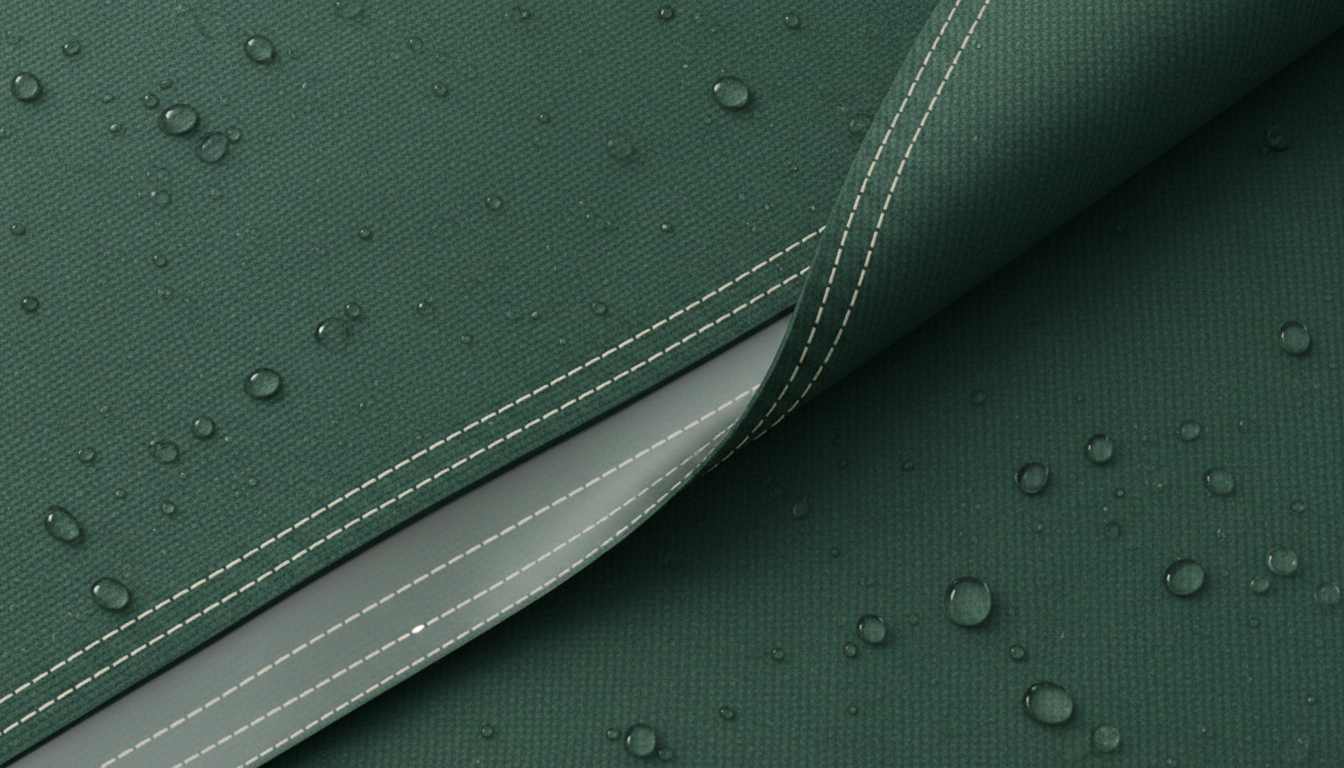
3. The seams matter as much as the fabric
Most tents are made from panels joined by stitching, and each stitch line creates a potential pathway for water. Manufacturers may tape, weld or seal seams, but the details vary by model and fabric. Look for a clear explanation of how the seams are protected rather than assuming that the waterproof rating automatically covers every stitched join.
Check the points where poles, guyline attachments and doors put strain on the flysheet. These locations can see extra movement when wind gusts arrive. A well-designed shelter manages that movement without opening gaps or letting water pool. The construction of zip flaps and door thresholds also matters: rain driven horizontally can reach places that gentle vertical rain does not.
Before your first holiday, pitch the tent at home and inspect the seams and fabric from inside. If the manufacturer permits it, a controlled garden-hose check can reveal obvious issues, but avoid using high-pressure jets or treating the exercise as a substitute for a real weather test. Follow the manufacturer’s repair and care instructions for any faults.
4. Doors, vents and the groundsheet are common weak points
Even an excellent flysheet has openings. A door may be designed to channel rain away from the inner tent, but an open zip or badly positioned threshold can defeat that design. Check how the door behaves when partially opened in wet weather. A porch or sheltered side entrance can make family life much easier when everyone is returning with muddy shoes.
Ventilation needs careful thought too. Blocking every vent may seem sensible during rain, but damp air then collects inside. Look for vents that can remain effective without admitting direct rain, and for an inner sleeping compartment that keeps bedding away from the outer fabric. Do not press pillows or sleeping bags against a wet flysheet.
Finally, examine the groundsheet. Is it sewn in, bathtub-shaped, removable or separate? Does its edge encourage water to run away rather than collect beneath it? Never leave a footprint or extra tarp projecting beyond the tent, where it can catch rain and direct water under the floor. Keep the living space organised so people are not repeatedly dragging wet clothing across sleeping areas.
5. How to tell condensation from a leak
Finding droplets on the inside of the outer tent does not necessarily mean the waterproof coating has failed. Warm moist air from breathing, damp clothing and the surrounding environment can condense on a cooler surface overnight. Synthetic tents often have a separate breathable inner specifically to help keep occupants away from that moisture.
Condensation can be especially noticeable after a cool night with several people sleeping inside. Try to keep the intended ventilation paths open, store wet clothes away from bedding where possible and avoid touching the outer fabric. If droplets appear across a broad inner surface without a clear rain-entry point, condensation may be the explanation.
A genuine leak may instead show as a persistent wet track along a seam, zip or damaged patch during rainfall. Observe when and where the water appears before deciding to reproof the entire tent. The Camping and Caravanning Club’s tent-care advice explains both condensation and the need to dry tents thoroughly before storage.
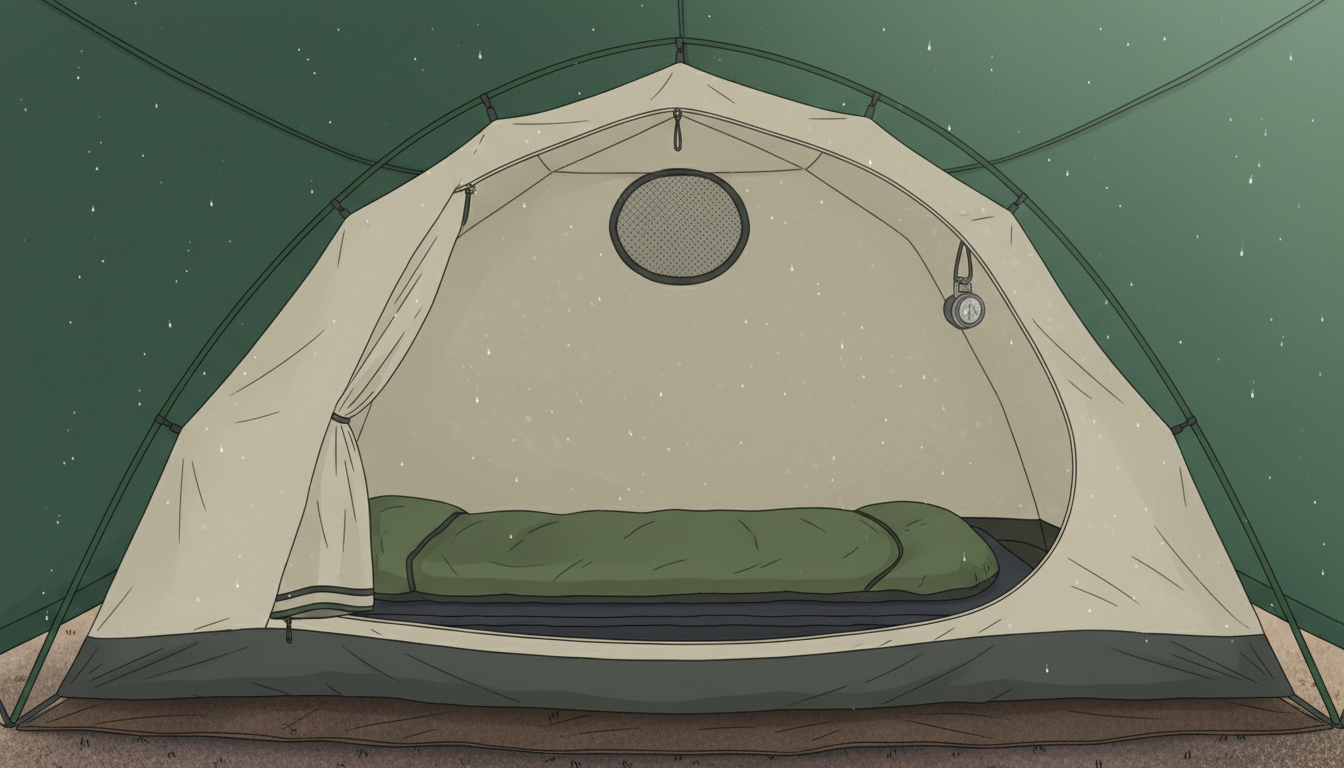
6. Pitch selection: the cheapest waterproofing improvement
Good site selection costs nothing and can matter enormously. Look for relatively level, firm ground with sensible drainage, away from hollows where water could collect. Check the site’s own pitch rules and the likely direction of rain and wind. A grassy pitch may look flat but still contain a shallow channel that becomes obvious only after a downpour.
Be cautious around exposed ridges, dead or overhanging branches and areas where strong gusts could damage the structure. Never assume a tent is safe in severe wind merely because its fabric has a high waterproof rating. The Met Office recommends monitoring the forecast and taking particular care when pitching in wind and rain.
On arrival, orient the tent according to the manufacturer’s guidance, peg it correctly and tension the guylines. Check that the flysheet is separated from the inner where the design requires it. Recheck tension after rain because wet fabric and softer ground can change the pitch. Avoid digging drainage trenches, which can damage a campsite and may be prohibited.
7. What to do when rain begins
Before a wet evening, bring loose equipment under appropriate shelter, move bedding away from walls and close openings facing the weather. Check pegs and guylines while conditions are still manageable. Keep dry clothing in waterproof bags, especially if the family has a long walk between the car and the pitch.
If a section of the flysheet begins to sag, follow the manufacturer’s instructions to retension it when safe. Do not pull lines so hard that you distort the structure. If the forecast deteriorates towards severe winds, thunderstorms or flooding, a more substantial building or vehicle may be the safer shelter. A tent is not lightning protection.
Keep combustion appliances outside. The NHS warns specifically against using barbecues or camping stoves inside tents because of carbon monoxide poisoning. A wet-weather camping plan should include safe meals and an alternative sheltered activity, not an improvised stove inside the sleeping area.
8. Reproofing, repairs and long-term care
Waterproof coatings and seam treatments can deteriorate with use, sunlight, dirt, abrasion and storage conditions. That does not mean every older tent needs an annual spray regardless of its condition. Start by inspecting it, cleaning it according to the manufacturer’s instructions and identifying the actual problem.
Small fabric punctures may be repairable with a compatible patch. A failed seam may need an appropriate seam treatment, while worn water-repellent finishes can sometimes be renewed. Use a product suitable for the tent’s fabric and coating: a treatment intended for one material may be inappropriate for another. Always follow the label and allow enough drying time.
After a wet holiday, unpack and dry the tent fully before long-term storage. Avoid harsh detergents, which may affect waterproof treatments. Store it somewhere clean and dry, with room for air circulation where practical. Regular care often protects your investment better than chasing a higher specification on the next tent.

9. A realistic family-tent comparison checklist
When comparing two tents, write down the flysheet HH and groundsheet HH separately if both are published. Next record whether the seams are taped or sealed, whether the door has rain protection, whether the floor is integrated and how ventilation is arranged. Add the actual packed weight, bedroom measurements, pitching method and spare-part availability.
Then describe your intended trip: two nights in a sheltered field, a week in Wales, or a more exposed autumn site. Consider how many people must stay comfortable inside when it rains and how easily one or two adults can pitch the structure. This gives you a practical comparison rather than a competition between numbers.
If a retailer provides only the hydrostatic-head figure, ask for the model manual and a clear specification sheet. A trustworthy decision can include uncertainty: if weather suitability or construction details cannot be verified, move the tent into a ‘research further’ column rather than guessing.
10. The questions readers ask most
Does 3,000mm mean three metres of rainfall? No. It describes the water pressure resisted by fabric in a test, not a rainfall depth or duration. Is 5,000mm automatically better? It indicates higher tested fabric resistance under comparable methods, but the complete tent still depends on seams, doors, pitching and condition.
Will a tent stay dry in a thunderstorm? Rain resistance does not make a tent a safe lightning shelter. Follow current warnings and seek substantial shelter when necessary. Can a waterproof tent get wet inside? Yes: condensation, open doors, water carried in on clothing and leaks at damaged seams can all make the interior damp.
Should I reproof a new tent? Normally first check the manufacturer’s care guidance; do not apply treatments automatically. What if my old tent leaks? Find the source, distinguish condensation from penetration, and investigate suitable repairs before replacing the whole shelter.
The Camping Edit verdict
Hydrostatic head is useful information, but it is not a complete weather forecast for your tent. Read the number as one piece of evidence about a material. For a reliable UK camping setup, combine sensible fabric performance with protected seams, good doors, a well-designed groundsheet, usable ventilation and a pitch that suits the weather.
Our recommendation is to choose the tent that solves your family’s real problems, then practise using it before a wet weekend. A modest tent that is pitched properly and cared for can be a better purchase than a larger, more expensive model whose impressive waterproof figure distracts from an awkward layout or poor maintenance.
Sources and further reading
- The Camping and Caravanning Club — Expert Guide to Buying a Tent (updated 12 October 2026)
- The Camping and Caravanning Club — How to Waterproof a Tent
- The Camping and Caravanning Club — Taking Care of Your Tent
- Met Office — Camping in Wind and Rain
- NHS — Carbon Monoxide Poisoning
Editorial note: This is an independent information guide, not a product review. There are no paid product links in this article. Editorial illustrations, where used, depict generic camping situations rather than documented equipment tests.


Leave a Reply