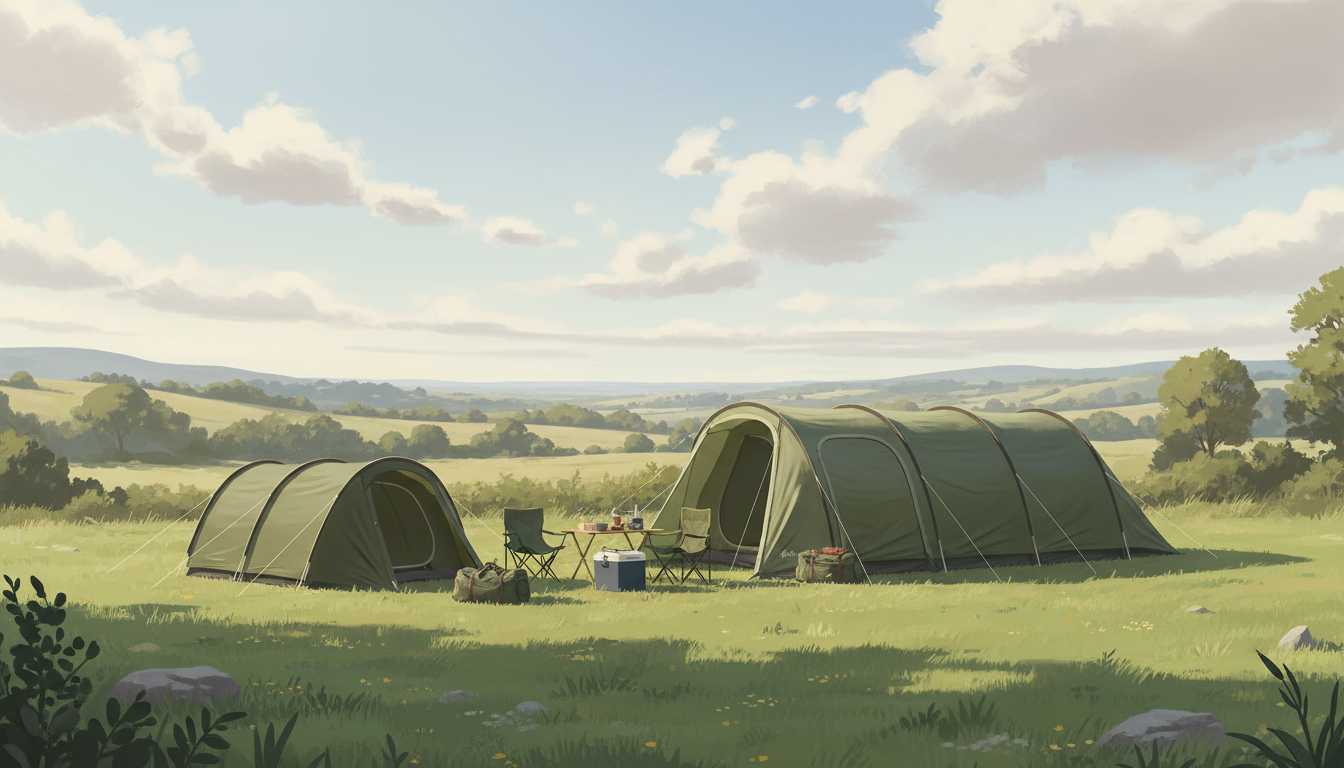
THE CAMPING EDIT / FAMILY BUYING INTELLIGENCE — A research-led comparison of family-tent capacity, not a hands-on product test. Prepared 30 October 2026.
The number on the bag is only a starting point
A four-person tent sounds like the obvious choice for two adults and two children. But a six-person model can offer extra room for bags, a wet-weather sitting area and the kind of small everyday conveniences that turn a crowded weekend into a relaxed holiday. The opposite can also be true: a six-person tent may be heavier, more awkward to pitch and simply too large for the site you have booked.
Rather than declaring one size the winner, this guide compares the practical trade-offs for UK families. We focus on space, pitching, transport, weather, budget and the actual routines of a camping trip. It is not a product roundup: no specific tent has been tested or endorsed here, and no retailer star ratings are used as evidence.
If you need a broad introduction to materials, blackout bedrooms and waterproofing, read our complete family-tent buying guide. Here the question is narrower: when is a bigger berth number genuinely worth the extra weight and cost?
1. What four-person and six-person actually mean
Berth numbers refer to a manufacturer’s nominal sleeping capacity, not a promise of comfortable family living space. Two tents described as ‘four-person’ can have very different bedroom widths, living areas and standing heights. Likewise, a six-person tent might provide three two-person compartments, one large shared sleeping zone or a flexible combination of bedrooms.
The Camping and Caravanning Club recommends looking at sleeping capacity alongside living space, and its family-tent guidance illustrates how different layouts serve different families. A tent with generous communal room but narrow bedrooms can be less useful than one with modest floor area arranged intelligently.
Before comparing sizes, gather the floor plans for both models. Record the usable dimensions of every sleeping compartment, the main living area and the complete pitched footprint, including any awning and guylines. The berth label should be the first column in your comparison, not the last word.
2. Measure your beds before you shop
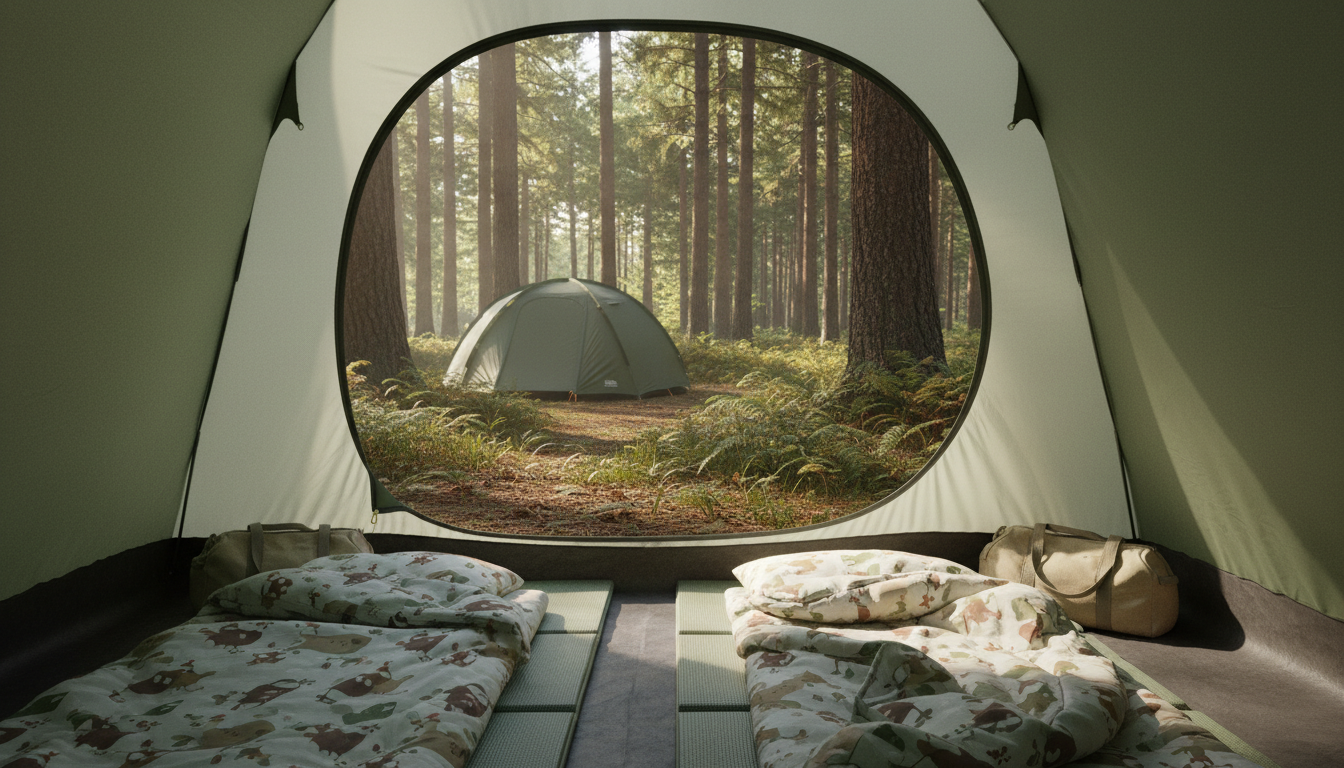
Start with the equipment you already own. Measure the width and length of every sleeping mat, camp bed and air mattress when inflated or assembled. Add the space needed to open a sleeping-bag zip, step out at night and reach a bedroom door. A large double air bed can take much more room than two narrow hiking mats.
Draw the floor plan on paper or use rectangles cut to scale. If two adult beds and children’s mats fill the whole sleeping compartment, ask where pyjamas, books and night-time essentials will go. Avoid pushing bedding directly against the outer tent wall; damp fabric and condensation can make this uncomfortable.
A family of four using compact mats may fit well in a four-person tent. The same family using deep air beds and wanting separate bedrooms may be better served by a larger model. This is why the phrase ‘sleeps six’ should never replace a measurement.
3. Living space matters most when the weather changes
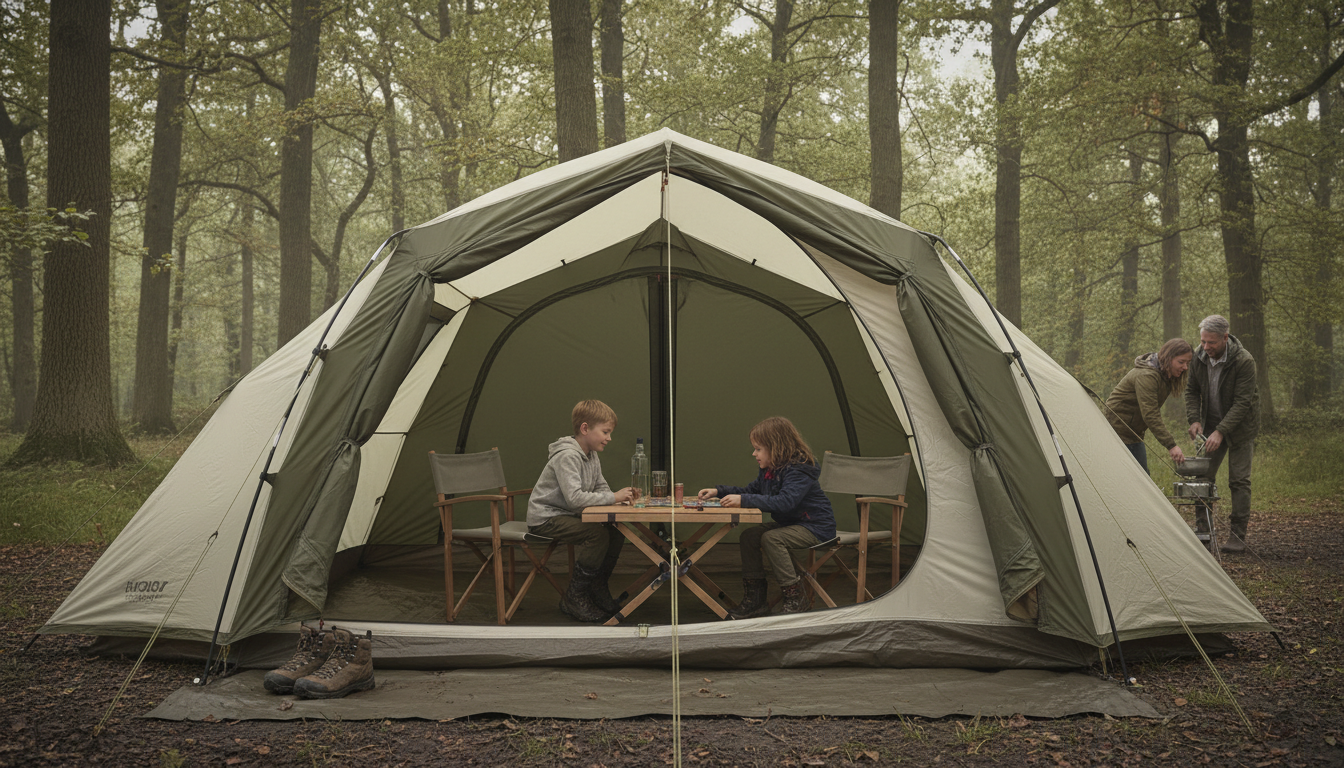
On a sunny campsite, families naturally spread outside. Chairs, shoes, games and picnic equipment can all occupy the area around the tent, subject to site rules. When rain arrives, those items need somewhere safe and dry. The living space becomes a practical shelter rather than a luxury.
Imagine four people spending three wet hours indoors. Is there space to sit around a small table without stepping on bedding? Can someone reach the door while another person changes clothes? Can you keep muddy footwear near the entrance and dry sleeping kit further back? A larger tent often helps, but layout and wall slope matter as much as total floor area.
A six-person tent with a shallow porch might offer less useful covered living space than a thoughtfully designed four-person tunnel tent. Compare actual internal floor dimensions and headroom, not brochure photographs taken with wide-angle lenses.
4. Separate bedrooms: privacy, sleep and family routines
Bedroom arrangements can matter more than total capacity. Parents may want a separate sleeping compartment from older children; younger children may prefer to stay together. A removable divider gives flexibility as children grow. Some tents position sleeping rooms at opposite ends, which can improve privacy but change how people move through the living area.
Check whether one person can reach the toilet at night without waking everyone. Look for zipped dividers, adequate ventilation and enough width to keep bedding off damp walls. Blackout fabric can reduce early daylight, although it does not guarantee a cool or silent sleeping environment.
A four-person tent with two practical bedrooms might suit a family better than a six-person tent with one undivided sleeping hall. Equally, a six-person model with three two-person rooms may allow a family to dedicate one compartment to luggage, but only if the manufacturer permits the intended use and ventilation remains effective.
5. The hidden cost of a bigger footprint
Before buying a six-person tent, check the maximum tent size allowed by your usual campsites. Some pitches have defined dimensions, hardstanding boundaries or spacing rules. The full footprint includes the flysheet, any fitted porch and the space required for guylines, not merely the floor inside the bedrooms.
A long tunnel tent can be awkward on an irregular or sloping pitch. If the entrance faces the wrong way, the usable outdoor living space may become cramped. Families who frequently move between small sites may prefer a more compact tent that offers flexibility even if the interior is less generous.
Do not assume a larger tent automatically withstands stronger winds. A bigger structure can present more surface area to gusts. Pitch according to the manufacturer’s guidance, use the correct pegs and guylines and respond to weather warnings. The Met Office advises particular care when camping in wind and rain.
6. Weight, packed size and the car boot
A larger family tent often means more fabric, longer poles or air beams, a bulkier bag and extra pegs. The exact difference depends on construction, not berth number alone. An inflatable six-person model may be easier to raise in one sense yet heavy to carry from the car; a smaller poled tent may take longer to assemble but be easier to store.
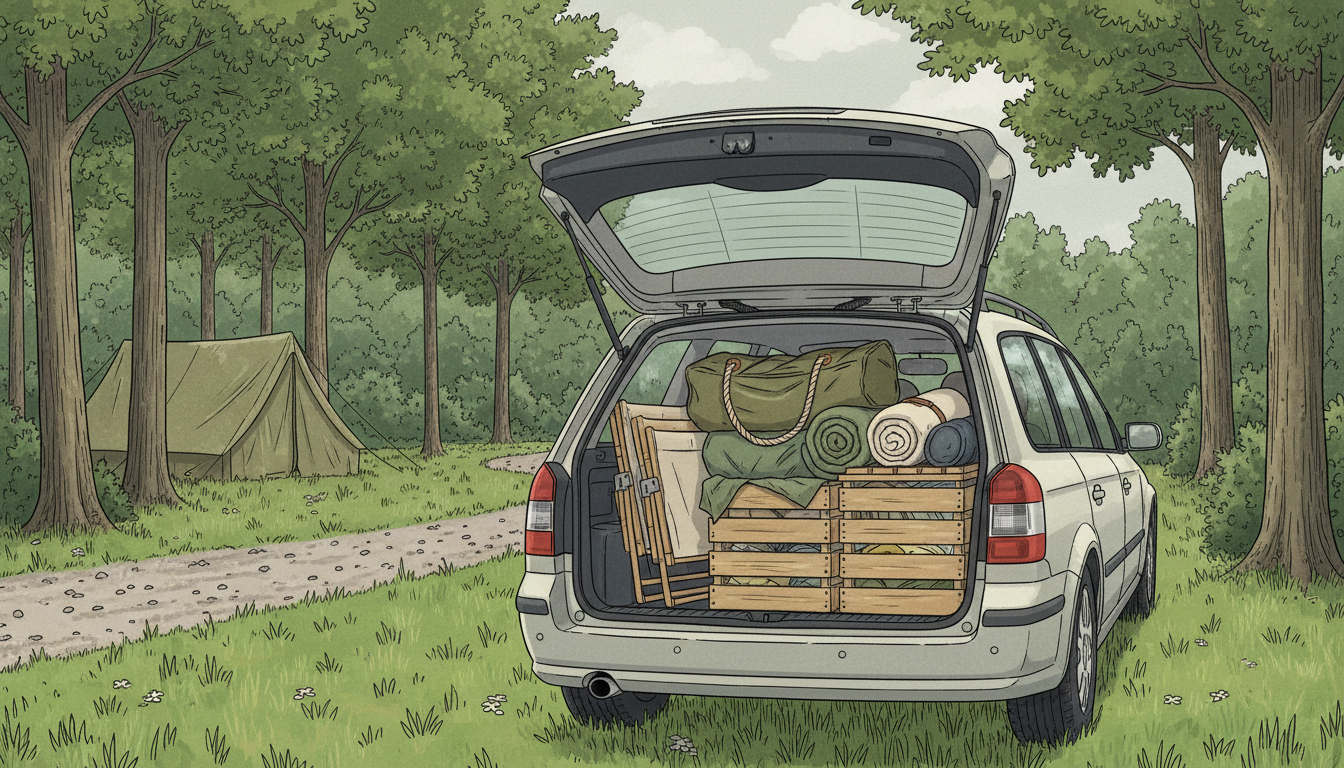
Check the listed packed dimensions and total weight. Then place a tape measure inside your car boot and consider everything else that must travel: sleeping bags, food, clothes, chairs, toys and perhaps a pushchair. A tent that fits only after removing essential luggage is not a practical family purchase.
Also think about the return journey. Wet fabric is less pleasant to handle, and a packed bag can feel more cumbersome when muddy. A generous carry bag, sensible handles and space to dry the tent at home are small details worth including in the buying decision.
7. Pitching time and how many adults are available
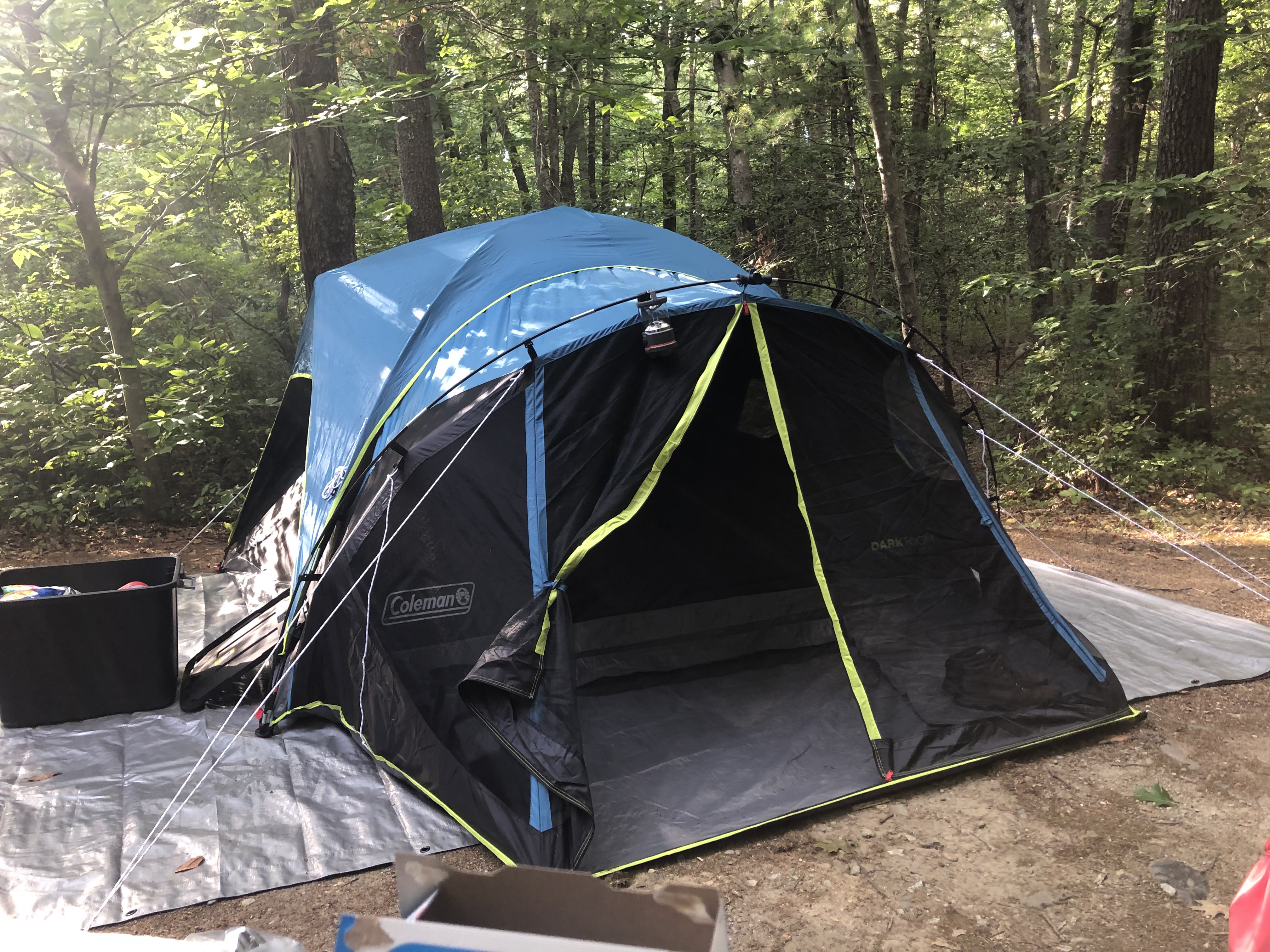
On a short weekend, every extra minute spent pitching reduces the time available to enjoy the campsite. A larger tent may involve more pegs, extra poles or several air beams, but some well-designed larger shelters pitch quickly. Marketing claims about setup time should be treated cautiously unless you can see the actual method demonstrated.
Read the manufacturer’s instructions before purchasing. Can one adult complete the critical steps while the other supervises children? Does the tent pitch outer-first, inner-first or as one unit? Can the bedrooms remain attached during packing? What happens if you arrive in rain and need to protect bedding while the structure goes up?
Practise at home before the first trip. You will learn whether the bag contains all the components and whether the instructions make sense. A compact tent you can pitch confidently may be more enjoyable than a spacious model that causes an argument every time the weather turns.
8. Cost: buy the features you will actually use
Six-person tents are often more expensive than smaller models within a similar range, but price comparisons are easily distorted by different materials, brands, pole systems and included accessories. A four-person tent with premium fabric and inflatable beams may cost more than a basic six-person poled tent.
Set a budget for the entire sleeping system, not just the shelter. You may need insulated mats, suitable sleeping bags, lighting, extra pegs, a footprint or storage equipment. A cheaper tent with room left in the budget for warm, comfortable bedding can be a better overall purchase than a premium tent that leaves everyone cold at night.
Compare warranty terms, spare parts and repairability as well as initial price. If a replacement pole or air-beam valve is available in the UK, a repair may extend the tent’s useful life. Do not treat unverified marketplace star ratings as a substitute for checking the actual specification and seller.
9. Four real-world family scenarios
Two adults and two young children, two-night summer trips: a well-laid-out four-person tent may be enough if everyone uses compact bedding and most daytime activity is outside. The same family taking a week in Wales: a larger living area can make rainy afternoons and storage much easier, so a five- or six-person layout may be worth considering.
One adult camping with three children: ease of pitching may outweigh the desire for extra space. Choose a model that can genuinely be erected by the available adult. Two adults, two teenagers and large air beds: bedroom width, privacy and access become central; a nominal four-person shelter may feel cramped even if the label suggests a perfect fit.
These are examples, not rules. A four-person tent with unusually generous dimensions can outperform a poorly arranged six-person design for a particular household. The best answer comes from measuring your real equipment and imagining an entire day in the tent, not just the night.
10. A simple comparison you can complete in ten minutes
Create two columns headed ‘four-person candidate’ and ‘six-person candidate’. For each, record the sleeping-room width and length, standing height, living-room floor area, overall pitched footprint, packed size, weight, pitching method, number of separate bedrooms, weather-protection details and replacement-part availability.
Then add three personal scores out of five: how easy it will be to pitch, how comfortable it will be on a rainy afternoon and how well it fits the car and campsite. Use your own priorities rather than an arbitrary universal ranking. If one option clearly fails a non-negotiable requirement, eliminate it even if it wins on price.
Finally, ask whether you are paying for genuinely useful extra room or for capacity you will never need. This decision will be different for a family camping every summer and one that wants a compact shelter for occasional festivals or short weekend escapes.
11. Common questions about choosing tent size
Should a family of four always buy a six-person tent? No. The extra space can be valuable, but the right answer depends on beds, living area, transport and pitch restrictions. Can a four-person tent fit two double air beds? Only if the specific bedroom dimensions and door clearance permit it; measure the beds first.
Are six-person tents warmer? Not necessarily. Comfort depends on weather, ventilation, bedding and ground insulation, not just the size of the air volume. Are bigger tents safer in bad weather? No simple rule applies; design, exposure, correct pitching and weather limits matter more.
What about five-person tents? They can be a useful middle ground, but compare actual measurements and layouts rather than assuming a precise halfway point. A particularly good five-person design may solve your family’s needs better than either size being compared.
Our verdict: choose a layout, not a label
If your family mostly takes short summer trips, values easy transport and uses compact sleeping equipment, a thoughtfully designed four-person tent may be the sensible option. If you stay longer, camp in changeable British weather or need separate sleeping and storage zones, the added room of a six-person model may make the holiday easier.
Neither size wins automatically. Measure the beds, inspect the floor plan, check the campsite’s pitch limits and practise the pitching sequence. The right tent is the one that works for the way you actually camp, including the wet afternoons you hope you will not have.
Sources and further reading
- The Camping and Caravanning Club — Expert Guide to Buying a Tent (updated 12 October 2026)
- The Camping and Caravanning Club — Family Tents Guide
- Met Office — Tips for Camping in Wet and Windy Weather
- NHS — Carbon Monoxide Poisoning
Editorial note: This article compares tent sizes and layouts, not verified individual Amazon listings. No products are endorsed and no affiliate links are included. Any accompanying images are editorial illustrations of generic tents.


Leave a Reply